
Energy prices are exploding. Reason for many people to reduce energy consumption and hopefully limit monthly energy costs. Solar panels, a cost-saving shower head or insulation are common solutions. However, did you know that the shower drain is one of the largest energy leaks in the home? Heat recovery from shower water is the solution! With this technique you use residual heat from warm shower water to preheat cold supply water to the shower mixer. This means that the mixer has to mix less hot water and therefore supplies the boiler with less energy.
1. WHAT IS A HEAT RECOVERY SHOWER DRAIN?
To use heat recovery, you can choose from a heat recovery shower pipe or a heat recovery shower drain . On this page we highlight 5 points you need to know about a shower drain heat recovery system.
Does the bathroom have a standard shower drain / drain? The warm (waste) shower water then flows directly to the sewer. However, the temperature of that water is still 35 degrees! Shame!
If you have a standard shower drain / drain in the bathroom, the warm (waste) shower water flows directly to the sewer. However, if you use a heat recovery shower drain, the drain is equipped with a copper heat exchanger. This allows you to use heat recovery (WTW) technology and use the residual heat from warm shower water.
With this technique, the warm waste shower water flows as a film over several copper tubes, the heat exchanger. Cold supply water flows through this heat exchanger to the shower mixer tap and/or central heating boiler. Before the water arrives in the heat exchanger it is approximately 10°C, after it leaves the heat exchanger the temperature has risen to 25°C.
The shower mixer therefore needs to mix less hot water to achieve the desired shower temperature. The result:
- Less energy consumption
- Lower CO2 emissions
- More tap water comfort with a heat pump boiler
2. WHERE DO YOU USE A HEAT RECOVERY SHOWER DRAIN?
Such a heat exchanger is often used in apartments, flats or bathrooms on the ground floor. If the shower is located on the 1st floor, we recommend a shower pipe heat recovery system. This copper tubular exchanger can be placed vertically under the shower (ground floor) and has a higher efficiency than a shower drain heat exchanger.
3. WHEN IS IT WISE TO INSTALL A HEAT RECOVERY SYSTEM?
Installing a shower drain heat recovery system is often more drastic than installing a shower pipe heat recovery system. A good time is when you are going to renovate the bathroom or get a completely new bathroom. An important aspect when installing is the installation depth. How much installation depth do you have and which gutter has the required dimensions.
4. WHAT TO LOOK FOR WHEN BUYING A SHOWER DRAIN HEAT RECOVERY
One of the most important points is the installation dimensions and the quality of the product. So you have quite coarse HRVs, one is made of plastic and the other of stainless steel. We also recommend that you take the following considerations into account:
- What is the efficiency of the drain?
- How easy is the HRV to clean (hair/soap residue)?
- Does the gutter comply with legionella prevention?
- How reliable is the gutter (moving parts?)
- Does the described installation depth include siphon?
5. WHY IS BUYING A HEAT RECOVERY SHOWER DRAIN A WISE CHOICE?
The boiler uses less energy (gas/electricity)
There are fewer CO2 emissions (more environmentally friendly)
A heat exchanger influences the energy label (better sales price)
Hot tap water is available for longer with a heat pump in combination with a tap water boiler/buffer tank
TYPES OF SHOWER DRAWER RESTRAINTS
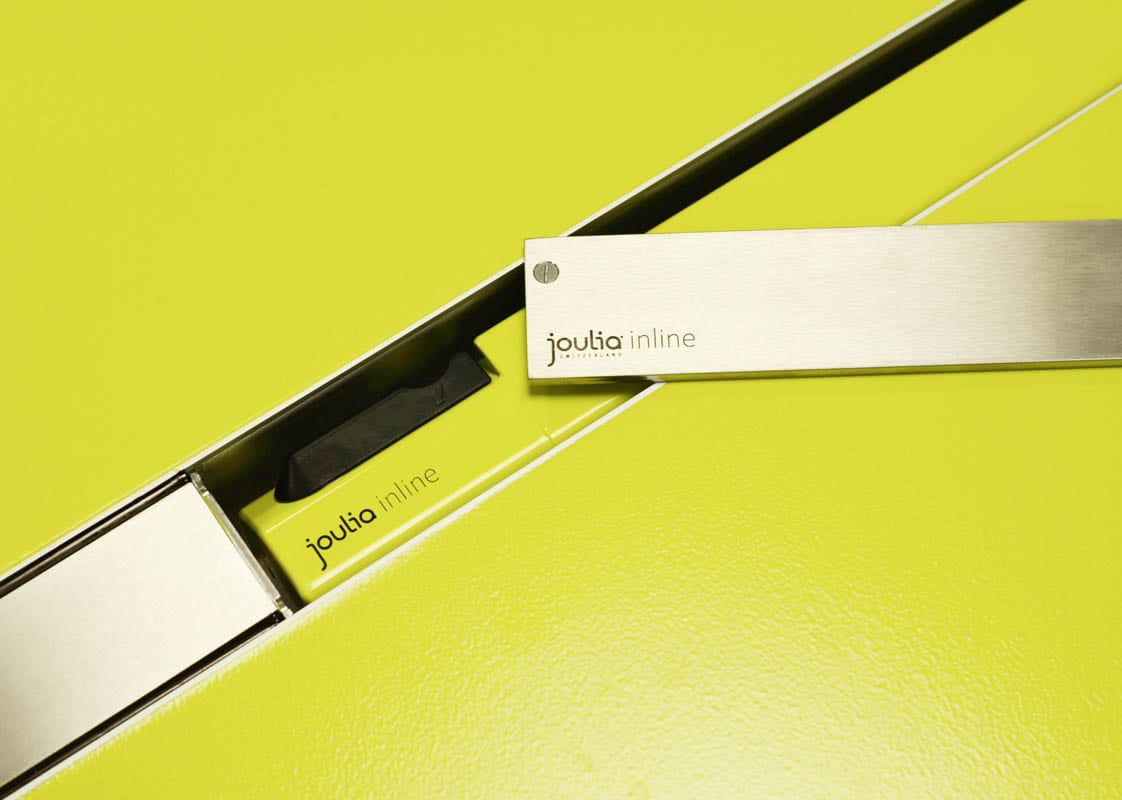
Various shower drain HRVs are available in the Netherlands . The main difference is in the material used (quality), type of heat exchanger, efficiency and design. A manufacturer that stands out is Joulia . Their shower drain is made of high-quality stainless steel with a copper heat exchanger. In addition, this gutter is known for its quick cleanability, acoustic leakage retention and low-maintenance operation.
- 10-pipe shower drain with 12cm installation depth
- 5-pipe shower drain with 12cm installation depth
- 3-pipe shower drain with 9cm installation depth